
The Klobe Vacuum Bell Overview
Conservative management of pectus excavatum
The alternative to surgery
Pectus excavatum management
Management of pectus excavatum has tradionally been by use of thoracic surgery (the Nuss procedure - pectus bar and others), by plastic surgery or by more conservative means including exercise regimes and the use of a vacuum bell.
The Klobe Vacuum Bell - an alternative to surgery
● Not surgical
● Not invasive
● Performed during daily life activities
● Applicable until middle age
● Functions in a similar way to braces used for teeth
Indications
● Pectus excavatum (funnel chest) and related bone
and cartilage deformities
● Patients between ages 5 and 59
● Designed for home use / school / work
Contraindications
● Skeletal disorders affecting bone stability.
(e.g. osteoporosis, osteogenesis imperfecta)
● Vascular disorders of the central cardiovascular system (e.g. aneurysm or as part of the Marfan syndrome, Ehlers-Danlos syndrome, Loeys-Dietz syndrome, etc)
● Coagulation disorders (e.g. thrombopathy, haemophilia or when taking strong anticoagulants)
Restrictions on intended use
Do not use the Vacuum Bell
● If an implant supports / reshapes the rib cage from within or if such an implant has failed to support / reshape the rib cage from within
● In situations where the blood may be supersaturated with dissolved gases.(e.g. in transport such as airplanes or high altitude railroads or immediately after a dive)
● During thoracic surgery (the Vacuum Bell is neither sterile, nor intended for sterilisation)
Anatomy of Pectus Excavatum

Clinical Blogs
-
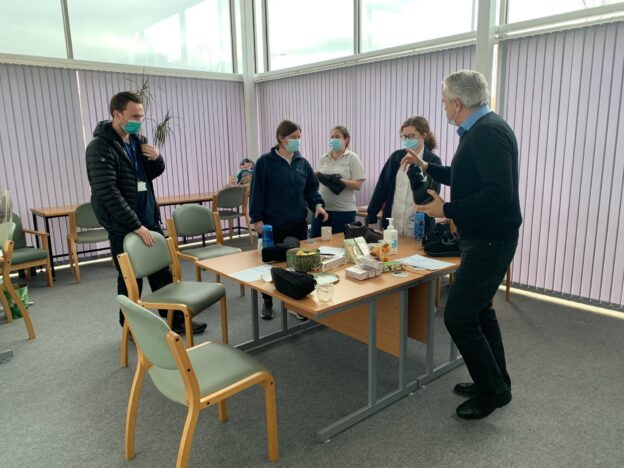
Sales Representatives or Clinical Educators
A lot has changed in terms of the way we work as a result of the Covid pandemic. Some of these … READ MORE
2nd February 2022
-

Covid-19 / A different disease for Orthotists; but also some very familiar sequela.
“We are facing a secondary pandemic of neurological disease…“
Since the start of this pandemic it has become ever clearer that … READ MORE
14th July 2020
-
Metatarsus Adductus: Do we under and over treat?
Talking with a clinical colleague, he feels we probably are over treating when the option for those 5% who do … READ MORE
11th March 2020
-

Will the clinician move from the treatment room to a 5G network, as we progress to treat the digital twin? IIoT is here!
The Industrial Internet of Things (IIoT) has most definitely hit the medical devices industry and that also means Orthotics. … READ MORE
12th February 2020
-

Is it time to challenge current thinking on the treatment of OA Knee?
What is this word structuralism?
It’s been quoted in medical journals both in favour and against, but I’ll
attempt to nutshell it … READ MORE15th January 2020
-

Casting for orthoses – Will this process make it into the next decade?
Following a fascinating conversation with a Senior Orthotist, I thought I would offer his thinking on the future of casting … READ MORE
11th December 2019
-

Orthotists – How do you decide when to intervene with paediatric flat feet?
The topic of paediatric flexible flat foot posture remains controversial, with little consensus on how this foot type should be … READ MORE
15th November 2019
-

Nike – Just did it! The sub 2hr shoe debate rages on.
Eliud Kipchoge
In the Austrian capital Vienna, the Kenyan distance runner Eliud Kipchoge became the first person to complete … READ MORE
16th October 2019
News Items
-
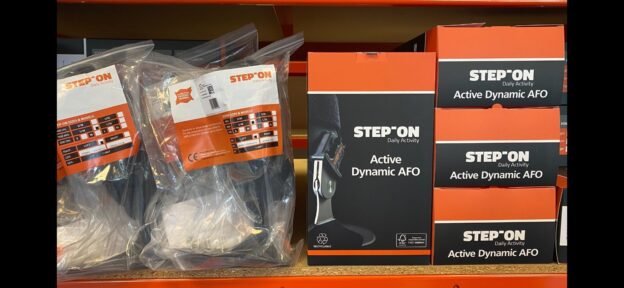
Reducing the environmental impact of orthotic products, whilst enhancing their brand.
When it comes to sustainability, some of our manufacturing partners are more proactive than others. For those that need encouragement, we … READ MORE
28th June 2022
-
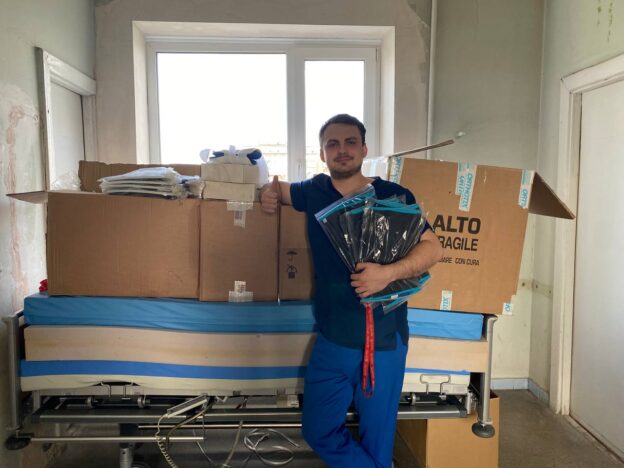
UK Orthotic donations on patients in Ukraine
Since the call to action, UK Orthotic product companies, service providers, hospital clinics and individual orthotists have been making significant … READ MORE
18th May 2022
-
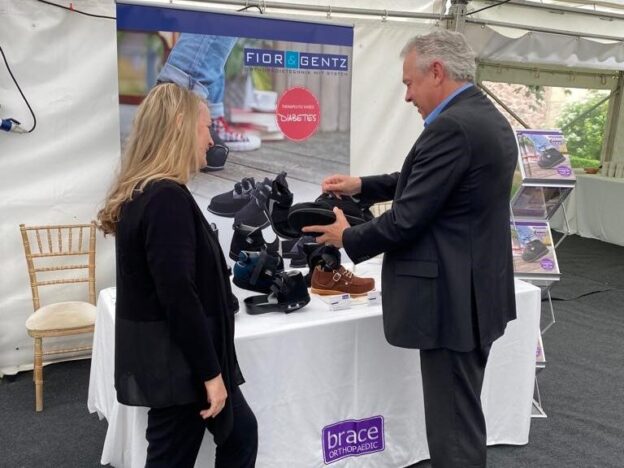
Brace Orthopaedic sponsor Malvern Diabetic Foot Conference 2022
Brace Orthopaedic are delighted to be sponsoring the Malvern Diabetic Foot conference for the second consecutive year.
The 2022 event will … READ MORE
13th May 2022
-

#OrthoticsToUkraine
Today is the 10th anniversary of Brace Orthopaedic and I can’t think of a better way to spend the day … READ MORE
12th April 2022
-

Orthotics to Ukraine
For the last ten days I have watched in horror the events in Ukraine and felt largely helpless. Like many others … READ MORE
7th March 2022
-

Making Orthotics sustainable……
As an industry Orthotics has traditionally been incredibly wasteful, with little regard for the environment. Quite rightly that is now changing, … READ MORE
17th February 2022
-
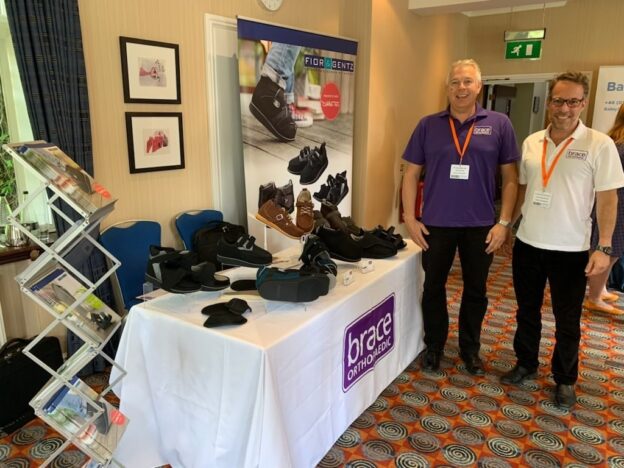
Brace Orthopaedic launches Fior & Gentz Diabetic Footwear at Malvern Conference
Brace Orthopaedic are proud to sponsor the Malvern Diabetic Foot Conference, taking place at the Abbey Hotel this 7th– 9th … READ MORE
9th July 2021
-

Brace Orthopaedic launches distribution of the Fior & Gentz Therapy Footwear Range
For many years I have longed to incorporate the Fior & Gentz Diabetes and Post-Op Therapy Footwear range into the … READ MORE
7th July 2021


Tel: 0191 258 8944 Fax: 0191 622 0117
sales@braceorthopaedic.co.uk
