

What is this word structuralism? It’s been quoted in medical journals both in favour and against, but I’ll attempt to nutshell it with regard to clinicians and clients. It’s thought to be an extreme focus among AHP’s that structural imbalances and asymmetry in the body can result in painful musculoskeletal conditions. In this model, the imbalances and asymmetries increase the abnormal mechanical / physical stresses imposed on the musculoskeletal system. This may lead to recurrent injury or the development of chronic conditions through a gradual process of wear and tear.
One of the most deeply held beliefs in MSK with AHP’s is that osteoarthritis is a “wear and tear” condition, that years of activity, sports, occupation, weakness / imbalance, have manifested into joint degradation due to perceived overuse. This is rather a narrow mechanical view of arthritis and directly suggests that the longer we live and/or the heavier we are, that this has increased our predisposition to joint issues.
The model then manifests clinically in the form of postural, structural and biomechanical assessments (PSB) in order to deliver manual conservative treatments and exercises that aim to correct these structural factors. It can wear a different hat each year; we’ve seen neural tension, tissue stress and fascia, kinematic chains – you name it! I do believe PSB to be clinically significant, but we must consider all other factors.
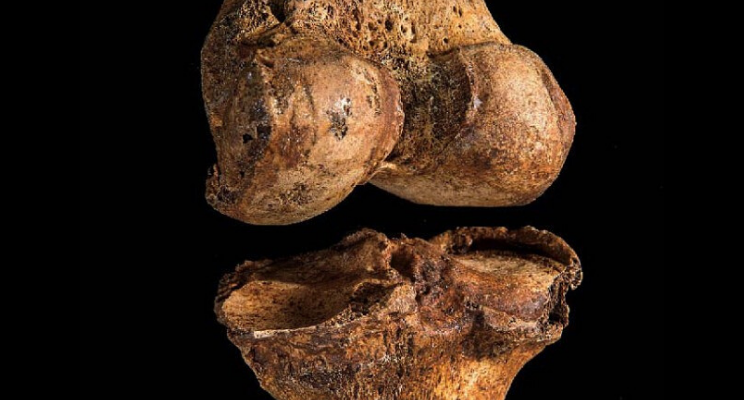
The prevalence of osteoarthritis has roughly doubled in the 20th century and that number didn’t change when weight and age were factored out. The study by Wallace et al using long-term historical and evolutionary data looked at the skeletal remains of older people with a well-documented body mass index from the last two centuries alongside prehistoric knees.
The implications are clear – loading and longer lifespans are almost certainly not the main cause. The unconfirmed, but likely candidates are the surge in recent lifestyle diseases: metabolic syndrome, diabetes and heart disease (see Kluzek et al or Jiang). These are reassuringly treatable. We can accept that biomechanically knee osteoarthritis “wear-and-tear” problem can be aggravated by weight and age, but recent studies show with great statistical significance that we have a bigger factor that must be contributing to its prevalence in our ageing population, likely biological with genes and heritability coming into play. So what Orthotics services are currently feeling or noticing, is possibly more referrals for OA knee bracing. Certainly this is something I have felt in the last decade, with a notable increase in Tri – compartment.
As an adjunct, Battié et al found with twins that as much as 47%–66% of spinal degeneration is due to hereditary and shared environmental factors, whereas only 2%–10% of the degeneration can be explained by physical stresses imposed by strenuous occupations or sporting activities.
In contrast to best practice guidelines for knee OA, findings from several different healthcare settings have identified that nonsurgical treatments are underused and TKA is overused. Empirical evidence and qualitative observations suggest that patients’ willingness to accept nonsurgical interventions for knee OA is also at an all time low. Qualitative investigation of why patients may feel that such non surgical interventions are of little value has been an important step toward increasing conservative treatment of knee OA.
I think we can all agree that there is no doubt in cases of excessive asymmetry / imbalance it is unlikely that manual therapies or conservative treatment can substantially lower a VAS pain score. The difficulty as always is being able to quantify the impact of conservative treatments on an individual with minor / moderate imbalance, or wear and tear. With any joint condition it depends on the individual biological and psychological threshold to reserve capacity to allow for asymmetry and imperfections to exist without symptoms.
Lederman has an excellent paper on this with LBP, with regard to structuralism that equally resonates with an OA knee; we didn’t really nutshell it but let’s just leave it at pathomechanics do not determine symptomatology.
Now back to structuralism – this one of the biggest challenges to the Orthotist treating these OA knees. Studies have illustrated quite well that patients’ beliefs in a biomechanical model of progressive joint degradation often appeared to originate within earlier clinical encounters and from literal interpretation of the term ‘wear and tear’. These beliefs led to uncertainty regarding interpretation of daily symptoms and participants’ ability to influence the rate of decline and certainty that joint replacement surgery represented the only effective solution to fix the damaged knee. I witness this weekly in clinic, as clients simply feel they are going through the tick box hurdles before being considered for partial or full TKA and we really need to get them to change this mindset.
As clinicians it is paramount that when treating with nonsurgical interventions you consider exploring and targeting patient held misconceptions about, causes, consequences, timeline, and treatment of knee OA to influence the above mindset. These misconceptions about knee OA treatment influence patients acceptance of nonsurgical, evidence-based treatments such as exercise and weight loss. The author would suggest that once diagnosed with “bone-on-bone” changes, we deliver this with more information on how the joint may of reached this point and that with hindsight there was likely nothing the client could of done differently with the knee. Disseminating up to date clinical evidence on effectiveness of conservative management to prevent many disregarding an exercise based or bracing intervention further damaging their joint or feeling it, is merely futile. It’s time to challenge and be honest about structuralism and get our clients on board with compliance.
#orthotics #osteoarthritis #knee #oa #oaknee