Category Archives: Paediatric orthotics-clinical

Orthotists – How do you decide when to intervene with paediatric flat feet?

The topic of paediatric flexible flat foot posture remains controversial, with little consensus on how this foot type should be measured, defined or assessed. Importantly a flat foot posture outside of expected norms may not require management. The structurally abnormal foot can present asymptomatically, whilst a seemingly structurally normal foot can present symptomatically. However, the experienced Orthotists discretion currently guides the decision on whether to treat or not to treat and remains variable from one to another.

There is a stigma about the paediatric foot which extends outside of just the Orthotist profession, as the progression of the foot is essential but it is critical that we avoid pathologising typical foot development. This is harmful to our patients, perpetuates unnecessary expectations and damages our profession. Most clinical concerns are physiological, nonpathological and not requiring intervention. Most debate is largely in identifying when a flat foot is atypical.

Working within paediatrics requires the clinician to assess the whole child, rather than simply the aesthetics of their foot posture. The static weight-bearing foot structure of the paediatric foot is only a small part of the clinical picture, as the dynamic function must be considered. Static foot posture measures fail to fully represent foot function and require placement within the clinical context. However, concentrating on a consensus for best practice for static measures that are validated and repeated is a good place to start. How many of you follow a validated tool such as the paediatric flat foot proforma (p-FFP) and the Foot posture index (FPI-6)?  The only flat foot scale that accommodates differences between normal and overweight/obese children.

It seems that the current approach to clinical practice is a mirroring of the clinical models for managing adult feet, whereby some foot types are assumed problematic, even though there is no strong evidence for this. Parents are frequently concerned by the appearance of children’s feet and worried that their child’s future will be impacted by deformity and pain. It has been established that adults with flexible flat feet have a significantly increased likelihood of reporting back or lower limb pain, foot pain, hallux abducto valgus and degenerative joint disease. The question of the paediatric foot divides clinical opinion, as we need an ethical and reasoned approach to clinical practice that is evidentially required, with a uniformed approach to rethink and dispel unproven beliefs based on adult comparison and yes ‘shock horror’ – vertical heels aren’t the norm!

Children’s feet are developing structures and the absence of an arch is a typical stage of development. Children are born with flexible flat feet, progressively developing a medial longitudinal arch during the first decade of life. This trend of reducing flat foot with increasing age is consistently noted within the literature. Despite flat feet being a typical developmental occurrence, it is still a frequent reason for which parents seek opinion.

So, what do clinicians say with any certainty? Currently it is clinically accepted that all typically developing children are born with flexible flat feet, progressively developing a medial longitudinal arch during the first decade of life. Healthy, typically developing children can be expected to have a flat foot type during their development which can reach normality at 7-8 years old. We are however still waiting for the original reference for this and it’s never been found! Most studies show this ‘normalising’ which is more like the foot posture becoming static at a slower velocity than those earlier years, it can in fact occur from anywhere between 3 to 8 years depending on which research you read, with strong evidence for maturation up to at least 10 years of age. Most prefer not to see children until 2.5 years, with at least 6 months independent walking.

With regard to ‘normality’ of paediatric foot posture, this will need to change with further research. Ideally it needs to move to align more readily with reference values, in keeping with the majority of other developmental children’s milestones and growth assessment methods. The typical red book of children’s weight, height, head circumference is readily reported against percentile values. Whereby, not only the percentile score at any one point in time is of importance, but indeed the consistent trajectory of that measure over time offers a clear, validated measure of change. This is the future of paediatric foot research, as this would help with clarity for those often-hard decision feet that seem extreme, but maybe are just developing towards the extremes of typical and aren’t anything other than examples of the normal statistical variation which is expected within a normally distributed population.

The author however would suggest that you at least use the paediatric flat foot proforma (p-FFP), as it is diagnostically rich, repeatable and yet simple. As a tool it allows reliable comparison from baselines and between clinicians or researchers. In addition, the p-FFP maintains the simple ‘traffic light” framework, making it easy to explain to parents and other health professionals, whilst ensuring that all are literally on the same evidence-based page when considering the child’s flat foot. The simplicity of pain or no pain is an easy decision to treat, but for those with no pain what do you do when you are chairside? p-FFP will help you rationalise and make those decisions. As part of this the Foot posture index (FPI-6) is a multi-planar measurement process, which has also demonstrated good reliability and ease of use. It is frequently used within clinical practice, evidenced by its inclusion in the Gait and Lower Limb Observation of Paediatrics tool, which is based on expert consensus and is an excellent record for those that we are just monitoring over time. However, we have a huge disparity between how paediatric flat foot is measured in the literature and how it is assessed in the Orthotists room, but if we can at least all be on the same page as clinicians it’s a start – rather than assuming and issuing on a hunch!  Monitor those feet, don’t feel pressured to just issue orthoses.

How do you approach this in your clinic?  Do you regularly challenge meaningfulness of a referral whose primary concern is just how “flat” the foot is?

linkedinmail

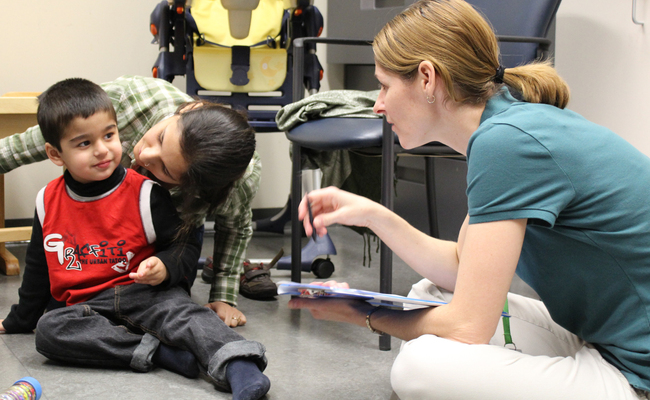
Communicating with children in your clinic.

Speaking with a Senior Orthotist recently, his thoughts on this issue (as outlined below) I found thought provoking and important to share.

The United Nations convention on the rights of a child 1989 changed the way children are viewed and treated – as human beings with a distinct set of rights, instead of as passive objects of care. It stipulates a child’s right to freedom of expression. CQC in England highlighted inequalities of communication experiences for children with physical, learning or mental health needs. The importance of good communication was emphasised. However, these inequalities have persisted despite legislation and ground level hospital policies. This agenda can be lost during the day-to-day pressures, but this is not acceptable as it is a low cost solvable issue.

The care inquiry found more than a quarter of children do not feel their views often count. Even if their views do not triumph, children want to be asked what they think and to feel they have been heard. Where efforts are made to provide children a “voice,” it must be more than a token attempt that reflects the perspective of adults.

Children who come to clinic are being raised in a great variety of social arrangements, facing very different challenges in their daily lives. They have different dreams and aspirations for their futures. Many children have the absence of a protective and loving environment, others deal with unimaginable situations and catastrophes, as well as extremely difficult daily lives. They have experienced trauma, discrimination, suffering and can have responsibilities well beyond their years.

Although children grow up in very different cultures or environments and have radically different genetic maps, for most but not all, they generally proceed through hierarchical developmental stages. People study this for a living and gain PhD’s it is so complex. So we will endeavour to concentrate on three major age groups while acknowledging that these groups are not rigid; the transition from one to another is fluid, variable and individual to each child. We will distil some basics that may help in clinic.

Early Years – Birth to 6 years

These earliest years are one of the most critical for development and our investment here establishes the foundations of all interactions in the future.

● Use simple language, less is often more, often low-literacy and get rid of the jargon.

● Be playful, have lots of toys, coloured pencils, paper, flashcards and worksheets with happy and sad faces. These methods are shown to be helpful when communicating with a child with a learning disability.

● Children are aware of differences at a very early age. Present children, similar and different than themselves as equals.

● Involve “question and answer” interactions and encourage talk, it’s the easiest way to establish a rapport.

● Include ways children can calm themselves, squeeze a toy, sing a song, let them choose which side they want casting, let them dunk the plaster for you, hold the tape measure etc., etc..

Also if you work in Paediatrics in the UK and have nothing in your room, or can’t keep anything in your room, firstly – Why? Then apply to the charity below and get yourself a distraction box which is free and mobile, you have no excuse!!!

https://www.starlight.org.uk/what-we-do/hospitals-and-hospices/starlight-distraction-boxes/

● And finally, if all else fails, bubbles, bubbles, bubbles or a bubble machine – it’s a winner.

Middle Years – 7 to 12

During middle years, children gradually develop more independence. They can take more responsibility for their behaviour, learning tasks that develop self-confidence and independence.

● They like to have their feelings and worries understood and respected

● They begin to actively learn about right/wrong and make moral decisions, so share information with them so they can make informed choices.

● They are more concerned about body image and appearance, which can introduce sensitive topics like anger or disability. Go that extra mile to ensure cosmesis and fit is good, accept you may need to compromise the prescription from something biomechanically perfect to something they will be happy to wear, Again see the point above, they can understand the compromise and everyone can consent, which will help with the transition to adolescent. The transition to secondary schooling is huge and body image is only amplified as we move into puberty.

Early Adolescent Years – 13 to 15

Adolescence is believed by many to be potentially a stormy and stressful period when young people are handling simultaneously physical, social, emotional and cognitive changes. This is the period of transition to adulthood. Additionally, there is a disconnect with complex thinking as early adolescents whose executive functions have yet to develop, have difficulty demonstrating rational abilities of planning, setting priorities, making decisions and weighing consequences of their actions.

● With increasing independence and breaking away from adult authority (depending on culture) they are often torn between rational thought and irrational risk taking. We definitely see some resistance to compliance of treatments in this age group.

We can see then that the nature of adolescence is very much culturally constructed. Cultural differences play a significant role in constructing what it means to be a child and an adolescent at different stages of development and requires that our communication be culturally specific. Some adolescents have very little spare time as they must help support their family, whereas others may have more spare time to use as they see fit, hopefully for stretching and not Xbox.

What is clearly shared by all cultures though, is the fact that while growing up adolescents continue to need empathic adults who provide guidance and serve as positive role models. These adults should set clear boundaries and expectations, guiding them to make the best choices with treatments.

● Often early adolescents are interested in mastering physical challenges on their own.

● Demand recognition and respect of their opinions, ideas and present divergent points of view.

● Require you to talk respectfully and not didactically – do not “talk down”.

● Often you need patience, humour and creativity with this age group.

As a side note, research into the effectiveness of using “fear” in communicating to children and young adults suggests that fear-arousing messages can be ineffective and have a “boomerang effect”. Concerns say for not wearing an AFO and loss of ROM should be conveyed honestly and with dignity, allowing the young adult to think critically. They will be better prepared to make healthy choices and actively engage in your treatment. No one, especially a child, learns best from a didactic or preachy delivery.

We have many AHP’s who are far better than Orthotists at this due to training, social workers most definitely spring to mind. Please share your approach and tips and then all can be a little better at communicating with children in clinic.

linkedinmail

What makes a good community based Paediatric Orthotic Service?

Despite agreement on the benefits of improving orthotic services, most agree it is still a “Cinderella service”. Often a paediatric community orthotic service is an adjunct to the already established paediatric physiotherapy service, with the orthotist visiting and working from within the physio department or specialist schools.

The services however are still a post code lottery; with access, quality and variation in entitlement. The reasons for this are too multi-facetted to dissect in this article, but managers and commissioners still have no consensus on the best economic model, with services still commissioned using a “commodity product” approach with price and volume taking precedence over quality, outcomes and timeliness. The below is not all encompassing, but hopefully outlines what certainly has helped service delivery at some clinics.

Ease of access, not just from a location aspect, but from a referral standpoint. Most services thankfully have moved away from the consultant led pathway where often little clinical value was added, ensuring clients are not delayed in seeing AHP’s in a timely fashion. Easy access to refer and self-referral for follow up episodes once under care helps the clients experience, reduces formal reviews for the sake of it and hugely reduces waiting lists

Paediatric clients have changing needs and require responsive and dynamic orthotics service provision. Defined priority criteria ​with maximum wait times to meet the needs of patients requiring urgent treatment, alongside correct appointment time allocation for complexity and first assessments are a must at triage. All paediatric clients deserve faster turnaround times due to growth and a common time line across services is a 2 week delivery from assessment. ​The most surprising disparity is initial wait list time, with some services covered offering an appointment within a week and another 4 months. This is simply not good enough for a growing child.

Again to compare two clinics, one has a very effective comprehensive pathway with pre orthotics encompassing​ a physio only led assessment, + / – simple 2D gait analysis, lower limb measures. A gait report is then shown to orthotist for opinion; joint summarised for probable treatment plan before any orthotic appointment is given. The joint appointment then with physio has clear goals with no uncertainty of treatment direction due to the earlier work, followed by post orthotics encompassing tuning, further gait analysis with outcome measures, repeated as necessary. It has taken children out of orthoses that demonstrate little clinical and functional benefit and screened those who will progress no further on pathway if deemed unsuitable for orthotics. This efficiency has led to a one week wait time. We must be certain what we have prescribed is efficient, tolerated and working optimally, then to share this information with the client and parents to help them understand how conclusions for treatment are reached.

What the above illustrates however is data capture by various means and outcomes.​ Why not help managers and commissioners by demonstrating evidence and value in order to shape your services. Examples are one clinic preventing decommissioning of lycra by demonstrating efficiency in its selection criteria. Again a similar clinic using gait demonstrated for a select presentation and GMF that for best outcomes the properties of carbon fibre could not be replicated by thermoplastic; this group of clients now benefit from access to custom carbon fibre without financial funding barriers. ​Audit ​alongside ​evidence ​at another reshaped ASD Toe walking orthotic provision, which resulted in a pathway that bypasses orthotics completely now, resulting in savings that can be reallocated.

One, if not the most important is permanent experienced staff, ​established working relationships, familiarity to clients and parents, including dedicated admin and physio assistants. The ideal scenario is to work in a MDT​ setting  with the same AHP’s, where a workflow rhythm is established, adding value for the client and aiding accuracy and repeatability of assessment measures. Clinics which rotate attending physio every clinic never flow well and working relationships are hindered. Where possible utilising ​appropriately trained physio assistants​, there supportive role for physio and orthotist make the most efficient use of clinical time and supply slots.

And you? What are your experiences of community paediatric orthotic services? Do you work at a centre of excellence? What are your KPI’s? We’d really like to hear from you…..linkedinmail