Category Archives: Industry news

Blatchford Clinical Conference

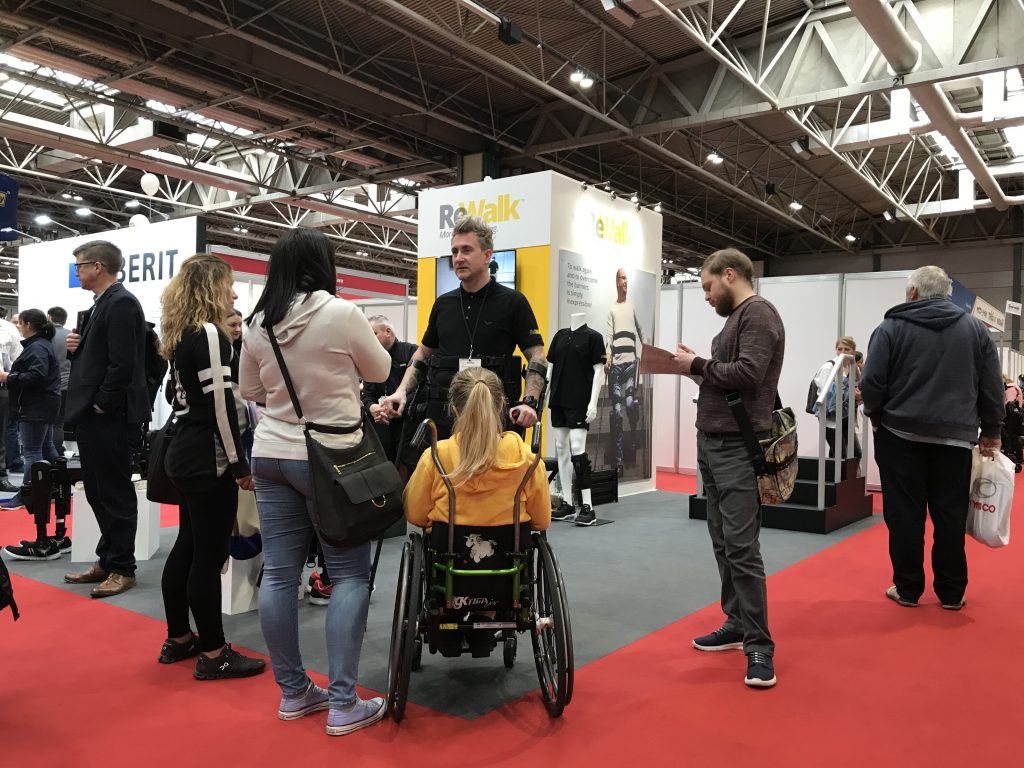
Alexandros Falkonakis and Gary Barrett of Brace Orthopaedic meeting attendees of the conference

This is a busy time of year for our industry, with numerous Exhibitions and Conferences to attend. Last week was no exception and following our first BSCOS (British Society for Children’s Orthopaedic Surgery) meeting, the team had the logistical challenge of a seven-hour drive over Friday night to be set up for the Blatchford Clinical Conference on Saturday morning.

Always extremely well organised and attended by the wider team of Blatchford Orthotists and Prosthetists, we were delighted to again get the chance to platform our latest product introductions and catch up with clinical friends and colleagues in a relaxed atmosphere.

For me, one of the main highlights of this conference is that all the supporting exhibitor companies are invited into the presentations and clinical break out sessions. It adds huge value to the day and a chance to see some of the latest advances taking place within Orthotics.

We are a relatively small industry and as an independent distributor we value hugely the relationships we have with all of our service partners. By sharing ideas and discussing possibilities in product development, this is how we create new product innovations that help to shape future options in clinical provision.

#orthopaedic #braces #orthoses

linkedinmail

45 years of Naidex

Naidex 2019

It is one of those periods in the year when the exhibitions come thick and fast.  Attending these events is a major time and resource commitment, but in my view essential to see what is happening in the market, be aware of new innovations and of course maintain network contacts.

Today I visited Naidex on its 45th anniversary and was impressed by the way this exhibition works on so many levels.  I was just one of 15,000 visitors who will come to this two day event and all for a variety of reasons.  There are of course some 350 exhibitors and a number of them showcased exclusive new product launches.  However one of the main differences with Naidex, is that it is open not just to the trade, but members of the public seeking the latest rehabilitation or independent living aids.  In addition to this, it is all about engaging, sharing information and knowledge.  There are debates and an incredible 250 speakers from across the industry taking part.

From my perspective – a day well spent and I will be back next year.

#naidex #rehabilitation #orthotics.

linkedinmail

The search for innovation at AAOS.

Clive Mitchell, Managing Director of Brace Orthopaedic in attendance at AAOS 2019 in Las Vegas

In its constant rotation, AAOS 2019 is back in Las Vegas and it’s interesting to make comparisons in respect of when this global orthopaedic gathering was last in town.  In terms of scale it is of course massive, but noticeably smaller this year in terms of exhibitors.  There also seems to be a greater representation of the medium sized players within the industry and presumably partly as a result of the never-ending acquisition trail at the top of the tree.

It is the first time exhibitors and smaller companies where I like to focus my efforts, as this is usually where the good stuff comes to light. Although there are undoubtedly products that fit into this category, I would suggest that following the theme of Arab Health, innovation in the orthopaedic bracing market remains largely stagnant.  As the USA disproportionately represents the single biggest opportunity in the world, most new products are aimed at this space.  Due to the fact that these products have to gain reimbursement coding against long established descriptions, innovation is effectively discouraged, as the focus simply becomes maximising profit against the appropriate code.  This scenario is not likely to change anytime soon and so many more innovative products may struggle to find a niche.        

With pressure on prices and the confines of the reimbursement systems around the world that are placed upon suppliers, we may find that the motivation for manufacturers to invest in R & D will be limited over the next few years.  That said I remain positive, as it is in our nature to innovate and our duty as suppliers within this industry to offer clinicians new solutions and patients the potential of a better outcome.     

linkedinmail

Brace Orthopaedic to attend AAOS 2019

In just a few weeks the international orthopaedic community will come together at the American Academy of Orthopaedic Surgeons (AAOS) Annual Meeting.

This is an event I look forward to every year, as it is a chance to meet up and engage with many colleagues from my wider orthotic network.  It is also a great opportunity to spend time with manufacturing partners, customers and of course search for those next great products.

So for any attendees with a new and innovative product for which they are considering distribution in the UK market, please feel free to DM me for a meeting during this event.

linkedinmail

Where East meets West – Arab Health 2019

Arab Health 2019

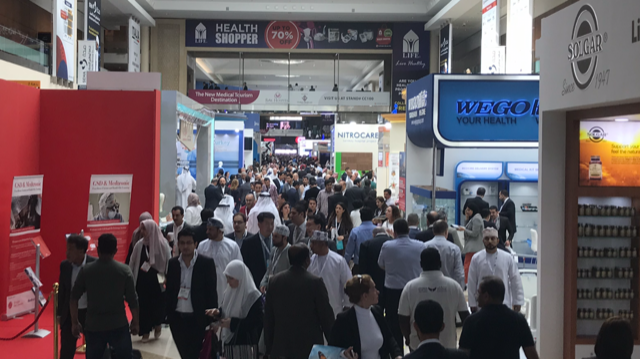
Arab Health is staggering in terms of its size and the statistics quickly confirm that. As the largest gathering of healthcare and trade professionals in the MENA (Middle East and North Africa) region, it boasts more than 5,000 exhibitors and 100,000 attendees from across 150 countries. This year it expects to build on the estimated US$778 million generated in business deals between medical manufacturers and attendees at last year’s show.

One of the main themes to this year’s exhibition is innovation, which fits well with the orthopaedic bracing products I represent in the UK with my Brace Orthopaedic business and internationally through my Step-On International business. So ‘wearing two hats’, I am looking for new innovative bracing products to bring to the UK market and also trying to locate premium distributors in countries where we are yet to launch the unique Step-On AFO.

My focus has always been on innovation and the pace at which it is moving in the healthcare industry is incredible. Highlighted here at Arab Health this week, the most prominent areas covered are AI, Smart Devices, Telemedicine Platforms and Health Monitors.

So what about orthopaedic bracing?

I am afraid my thirteen years of experience in this particular niche area of the orthopaedic industry tells me that innovation moves much more slowly here. This exhibition appears to be no different and so far I have only seen the usual ‘me too’ variations on what I have viewed a hundred times before. And yet the global market for orthotics is vast, so why is there an obvious lack of new and truly innovative products to discover? Maybe the answer lies in the fact that across the world and regardless of the type of reimbursement system, the pressure on pricing is relentless. So the challenge for the manufacturing companies is to try and maintain margin, but with a lower return. Inevitably many simply reduce the quality of their offering and we end up in a downward spiral. This is a dangerous road to go down. Often this means that patients are being braced with inferior products, which may not aid their rehabilitation, potentially creating problems and additional costs further down the line. So I would suggest a false economy.

I take a more positive approach. There will always be a handful of inventors, or manufacturers that see the value of investing in R & D to create the next generation of unique products. Products that will have added value. Products that offer the clinician a new treatment option and the patient a better, or quicker rehabilitation outcome. This is where the ‘good stuff’ happens and that is where I will continue my search…..

linkedinmail

Making a difference

I am not really one for resolutions, but I do think the start of a new year is an opportunity to appraise what we as individuals are contributing to the world in which we live.  At a time when countries are building walls, imposing trade barriers and becoming more insular, I personally feel more than ever a global citizen.  

The backdrop of these geopolitical events can be quite imposing and in many ways it is of course easier to just focus on ourselves and providing for the needs of our own family.  However the orthopaedic industry already improves the lives of so many and is in the privileged position to potentially change the life outcomes for many more millions of people around the globe.  

This is especially true when we are told by the World Health Organisation (WHO) that 10% (650 million) of the world’s population are disabled in some way and that 80% of these people live in Low Income Countries (LIC’s).  They also inform us that less than 3% of these people have access to rehabilitation services, which means the vast majority are likely be compelled to a life of poverty as a result.  This is shocking and thought provoking.

Through my network, I see day in day out the incredible work that clinicians are delivering in making a difference to their patients’ lives, often in challenging circumstances.  As a non-clinician I need to find more imaginative ways to make a contribution. The problem can seem overwhelming in terms of the scale, but given the number of us that work within the more developed parts of this industry, there have to be endless opportunities to do something that could help – one person, or a hundred.  

So many people underestimate their potential to make a positive difference to the lives of others. I am challenging myself to do more and would really like to hear what others have in mind.  Maybe we can use the power of this platform to share ideas and collaborate.    

linkedinmail

Brace Orthopaedic attends the MS Trust Conference 2018

Brace Orthopaedic’s Gary Barrett and Alex Falkonakis were delighted to attend the Multiple Sclerosis Trust Annual Conference this week, which was held in Hinckley, Leicestershire.

The theme for this year’s conference was to focus on the needs of people with advanced MS and highlighting the importance of delivering holistic care to everyone with MS. It takes MS specialist nurses, MS Neurologists, therapists in MS (TiMS) and other AHPs with expertise in MS to provide and co-ordinate holistic care for people living with MS.

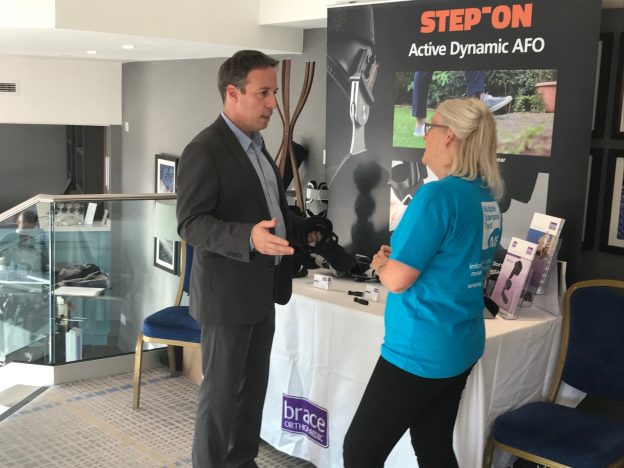
Gary Barrett, National Sales Manager at Brace Orthopaedic explained, “we had some excellent engagement with the TiMS, who were especially keen to learn more about Step-On, our active dynamic AFO. With its unique, adjustable dorsiflexion assistance, the AFO can be altered according to the patients’ needs and in the context of MS patients, (who can experience extreme fatigue) this can fluctuate throughout the course of a single day. Step-On is particularly helpful for patient’s active daily living, by assisting them to walk up and down stairs, help them cope with uneven ground and in some cases driving a car may be possible. We look forward to supporting therapists who work with MS patients in future and hope that our products can assist with their rehabilitation.”

If you would like to learn more about any of the Brace Orthopaedic portfolio of products, or to arrange a product presentation on the Step-On AFO’s, please call Customer Services on 0191 258 8944 or alternatively visit www.braceorthopaedic.co.uk/products/stepon.linkedinmail

Brace Orthopaedic adds OrthoHemi Shoulder Support to its portfolio

For some time now I have been focussed on sourcing innovative new products that could benefit patients with neurological conditions.  Too often potential is limited for this wider patient group because of a loss of muscular control, which in turn can lead to symptoms which affect movement and coordination.

This started many years ago with the introduction of the CDS (Controlled Dynamic Stretch) contracture bracing range, which have now become the gold standard for managing contracture in patients.  More recently this was complimented by the introduction of the unique family of Step-On AFO products.  Step-On is an active dynamic ‘off the shelf’ AFO which offers adjustable dorsiflexion assistance, enabling the clinician to fine tune the brace to the patients’ gait.

We are now launching the OrthoHemi Shoulder Support, which offers support, stabilisation and elevation of the shoulder when weakness or paralysis of the upper limb is involved.  The product has an innovative forearm cuff to prevent excessive forearm pronation, which I have noticed is often neglected in typical shoulder anti subluxation braces.  This cuff provides shoulder elevation and gleno-humeral congruity when it is needed most – post stroke (CVA), or to support paralysis around the shoulder and arm caused by other neuromuscular conditions.

This is a great addition to our range of Neuro related products and we look forward to presenting it to our clinical partners.

If you would like to understand more about the OrthoHemi Shoulder Support, please call Cathryn at the Brace Orthopaedic office on 0191 258 8944 where she would be delighted to help.  Alternatively, please visit our website at www.braceorthopaedic.co.uklinkedinmail

Finding a distribution partner – a simple guide to getting it right.

Over the last twelve years I have been amazed to see how casually exporters and distributors partner up, without having engaged in any real due diligence and then wonder why it all goes horribly wrong at some point down the line.

I believe there are a number of key guidelines to follow, if you are to give yourself the best chance of creating a collaboration that works.

A move into a new market should be based on market research and strategic decision making.  However, in my experience that is not how it happens.  More often this move into a new country comes on the back of a proposal from a potential distributor.  Select a distributor, do not let them select you.

Successful exporters understand the value in carrying out detailed market research before appointing a new distributor, but they are few and far between.  Cast the net wide and establish a pool of potential distributors using information from as many different sources as you can find.

Next you should create a checklist of criteria relevant to your ideal distributor profile. Developing and applying this checklist approach will result in a shorter and more targeted list of leads.

You should always pre-qualify the potential distributor.  This can initially be done by asking the relevant questions by email and reviewing the responses.  But if after this they seem appropriate, it should progress quickly onto Skype meetings and eventually a visit to their operation.

Embark on the collaboration with the distributor on the basis that it is going to be a long term relationship and not a trial market entry experience.  This way you resource the arrangement appropriately at the outset and you have a much better chance of getting it right, which will pay this investment back many times over.

Support the market entry with time, expertise, education, training and marketing collateral.  If you are confident you have selected the right distribution partner then commit resources from the outset and back them.

The distributor you select should be capable of developing a market over a sustained period of time.  This may mean that they may not be the best solution in the short term but accept that and look at the bigger picture.  It can be hard to quantify, but often I am looking for a business with a similar ethos to me.  One where I like the culture and a team of people I feel comfortable working with.

In a lot of countries the distributor will be the only source of information.  My experience tells me that the willingness of a potential distributor to provide meaningful data is a really good indication of how successful the relationship might be.  This needs to be an on-going process, so always make sure distributors provide you with detailed market intelligence and financial performance data.

As both a distributor and an exporter with my different businesses, I am in the perfect position to understand how best these relationships work.  I have made many of the mistakes listed above and had to learn from those painful outcomes.  This is why I offer my insight and would be pleased to engage & discuss my experiences further with those that have a specific interest.linkedinmail

Is your Orthotic Clinic Room fit for purpose?

Over the past twelve years I have visited scores of Orthotists in clinic rooms all over the UK to present and discuss products.  It has never ceased to amaze me how the quality and functionality of these clinical spaces vary so much from one hospital to the next.  Quite frankly many just don’t seem fit for purpose.

Inevitably the size of these rooms changes from one site to another, but so do the facilities.  I have seen rooms with no desk, leaving the Orthotist to write notes on the windowsill.  Also a clinic room with no sink, with water having to be carried between rooms.  It is also not uncommon to have the Orthotist working in the same room as administrative staff, whilst they are talking on the phone and affording the patient very little or no privacy.

Often rooms are so small that the plinth is not a wide one and has to be put against a wall, meaning you can’t walk around to examine the other limb.  Many times the size of these rooms dictate that the clinician is forced to use adjacent corridors or open spaces for outcomes like a 10m walk trial.

Even basics like clinics being sited on the second or third floor, so when there is an issue with the lift being out of order, it requires patients to be seen in a lobby or waiting area.

And of course some of these clinics are still referred to as Surgical Appliances……

So what would an ideal clinic room look like?

It probably needs to be 8m x 8m to allow for all the furniture, adequate seating and still space for walking and wheelchairs to move around. Ideally the room will have an adjustable plinth bed for clients, adjustable height chair, plaster sink, desk, stool with wheels for the clinician and a computer.  If you are really lucky some parallel bars for walking trials with new devices, adult and paediatric height.

In an ideal world there should also be a sharps box, disinfectant wipes, alcohol gel, sink with hot water & soap, confidential waste bin, normal waste bin and clinical waste bin.  A window with natural light would be great.

Now there are some really good purpose built facilities around the UK, but many of these sit outside the NHS hospital estate.

Since entering this industry I have always heard Orthotics referred to as the ‘Cinderella service’ but it seems to me, the least an Orthotist should expect is a clinic room that allows them to practice safely, efficiently and effectively.

I would be interested in other people’s experience of this issue.linkedinmail