Author Archives: Nicola Burgon

2020/21 Brace Orthopaedic Brochure

2020/21 Brace Orthopaedic Brochure

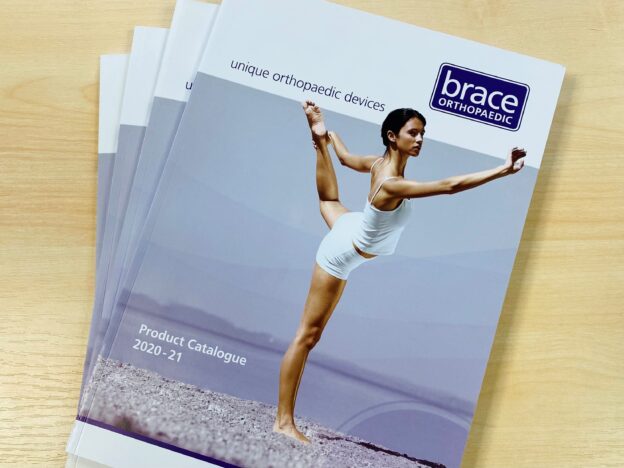
As part of our commitment to being a responsible and sustainable business, we here at Brace Orthopaedic now circulate our product catalogue digitally to all of our clinical colleagues in March each year.

However, we do still produce some hard copies printed on FSC certified materials for those that prefer to access our product information this way.

As clinical operations were disrupted in April and for many months after, we are now reminding clinicians that copies are still available to those that would like one.

To request your copy of the brochure please either email or call our Customer Services team on sales@braceorthopaedic.co.uk or 0191 258 8944 where Cathryn or Iain would be delighted to help.

Alternatively, for general product information or to download the brochure, please visit our website at www.braceorthopaedic.co.uk

#orthopaedic#orthotics#healthcare#bracing#bekind

linkedinmail

Brace Orthopaedic Christmas Opening Hours 2020/21

At Brace Orthopaedic this year, more than any other, we have learnt the importance of being able to offer a consistent and timely service to our customers. That is why we are maintaining an essentially normal service over the holiday period.

Our aim is to ensure our clinical partners can still get access to the full range of products that we offer, when they need them. This way we hope that any patient simply requiring a brace to enable them to leave hospital and return home for the festive period, should be able to do so.

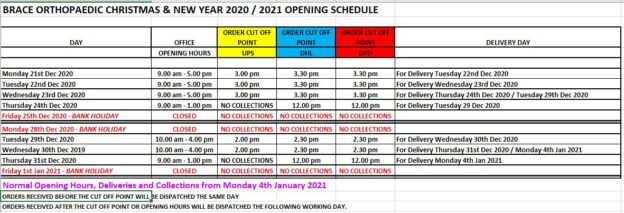
Detailed in the table below is our Christmas schedule. Should you require any further detail, or need further clarification please do not hesitate to call our Customer Services on 0191 258 8944 where Cathryn or Iain would be delighted to help. Alternatively, for general product information please visit our website at www.braceorthopaedic.co.uk

Christmas Opening Hours 2020.

We wish all of our customers a very Happy and safe Christmas.

linkedinmail

Covid-19 / A different disease for Orthotists; but also some very familiar sequela.

“We are facing a secondary pandemic of neurological disease…“

Since the start of this pandemic it has become ever clearer that Sars-CoV-2 is not just a turbo-charged common cold, it’s quirky, unusual and at times has terrifying traits. Most viruses have U shaped mortality curves, killing young and old alike. But Sars-CoV-2 typically only causes mild symptoms in children. The novel coronavirus also disproportionately affects men: up to 70% of people admitted to ICUs worldwide are male. However, 3 female children have already been through my clinic with multiple organ dysfunction secondary to Covid-19 complications, leading to PNS issues and more specifically, complete peroneal palsy.

Some early data on manifestations show that Encephalopathy, Encephalitis and Guillain-Barré syndrome, and additionally SARS-CoV-2 has been detected in the CSF of some patients. More recently the media have revealed more quirks, with many Covid-19 patients whose only symptom is confusion without cough or fatigue. Another anomaly is ‘Happy Hypoxia’. A typical blood saturation is 98%, below 85% should lead us to a loss of consciousness, coma or death and yet many Covid-19 patients present with saturation levels below 70% to 60%, yet are fully conscious and cognitively functional. Anosmia and ageusia are common and can occur in the absence of other clinical features.

It can be said with some certainty that the last months have led us to believe that Covid-19 is extremely heterogeneous in presentation. Alarmingly, published evidence reveals that Sars-CoV-2 could cross the blood-brain barrier, often thought to be coincidental as it is extremely rare; are now deemed not so. The brain is normally shielded from infectious diseases by the blood-brain barrier – a lining of specialised cells inside the capillaries running through the brain and spinal cord. These block microbes and other toxic agents from infecting the brain. If Sars-CoV-2 can cross this barrier, it suggests that not only can the virus get into the core of the central nervous system, but also that it may remain there, with the potential to return years down the line.

‘The virus’s impact on the nervous system could be far larger and more devastating than its impact on the lungs’.

Predominantly a respiratory disease, neurological manifestations are being recognised increasingly. On the basis of knowledge of other coronaviruses, especially those that caused the severe acute respiratory syndrome and Middle East respiratory syndrome epidemics, cases of CNS and peripheral nervous system disease caused by SARS-CoV-2 might have been expected to be rare, but this is not the case.

We have to be careful to log what is either direct or indirect causation from the Virus, hypoxic encephalopathy and critical care neuropathy spring to mind, but it is still worth including infectious, para-infectious, and post-infectious encephalitis, hypercoagulable states leading to stroke and acute neuropathies such as Guillain-Barré syndrome, as these are all going to fall into needing some form of treatment by an AHP. To date I have had to deal with 2 GBS patients and complete Brachial plexus injuries due to central line complications.

The challenges are recognising neurological disease associated with SARS-CoV-2 in patients who are mild or asymptomatic, especially if the primary COVID-19 illness occurred weeks earlier. The proportion of infections leading to direct neurological disease will probably remain small, but these patients may be left with severe neurological sequelae.

With so many people infected, the overall number of neurological patients and their associated health burden, social and economic costs might indeed be large. Although neurological complications are rare in SARS, MERS and COVID-19, the sheer scale of the current pandemic means that even a small proportion could build up to a significant number of cases.

The minimum prevalence of CNS complications ranged from 0·04% for SARS to 0·20% for MERS, whilst PNS complications ranged from 0·05% for SARS to 0·16% for MERS. Extrapolate these numbers of cases with neurological complications of COVID-19 with the approximate 12.5 – 15 million cases of COVID-19 globally at time of writing, then prevalence runs at around 6 – 30k patients with CNS complications and 7.5 – 24k with PNS complications. These numbers, which do not include the increasingly important syndromes of stroke-associated COVID-19 infection, will rise as the pandemic continues and we are looking at the Americas here in particular!

NHS planners should take note and policy makers must prepare for this eventuality. I’ll be completing my 3rd weekly ‘Covid clinic’ this week of in-patients requiring Orthotics on our specialist neurological rehab wards. This is one relatively small hospital in the UK that can sustain a clinic just from the Covid-19 fall out weekly. It’s a sobering experience. Not everyone is ‘walking out’ a survivor on discharge day.

The biggest shock is acute cerebrovascular disease emerging as an important complication, with cohort studies reporting stroke in 2 – 6% of patients hospitalised with COVID-19, which takes us to around 60 – 180k. Again, I have personally had 2 of these cases in the past week.

In one national registry of 125 patients with COVID-19, neurological or psychiatric disease was reported over a 3 week period, 31% patients had altered mental status and 18% with a neuropsychiatric diagnosis, including psychosis and dementia-like syndrome. Notably, 62% of patients had a cerebrovascular event: 46% ischaemic strokes, 7% intracerebral haemorrhages, <1% CNS vasculitis and 8% other cerebrovascular events. Hypercoagulable states and cerebrovascular disease which are seen rarely for some acute viral infections, are an important neurological complication of COVID-19. An expectation that 50–80% of the world’s population might be infected before herd immunity develops could easily see patients with neurological disease increase. Neurological complications, particularly encephalitis and stroke, can cause lifelong disability, with associated long-term care needs and that inevitably means Orthotists along the way.

We would like to broaden the conversation and hear from other clinicians who have had interesting Covid cases to treat….

linkedinmail

An Orthotist’s account of life on the ‘Covid-19 Frontline’

A major part of the normal work an Orthotist does is the daily ward round, fitting patients with an array of orthotic devices to manage their condition. Despite the presence of Covid-19 this work has to go on and many Orthotists have continued to provide this service at the frontline when required.

Orthotics is a small part of the healthcare industry in the UK, but a close network in which we all know each other to one degree or another. Over the years many of these clinicians have become my friends and so during these challenging times I wanted to stay in touch and see how they were coping. Across numerous telephone and email conversations they have recounted their current work experiences, many of which have left me completely humbled by the contribution they are making in these most testing of circumstances.

I felt it was important to share some of these accounts and so I have tried to encapsulate them through the experience of one particular Orthotist.

At the outset of this pandemic he recounted how everyone had seen the TV reports of Coronavirus approaching, in particular from Italy where there were numerous scenes of hospitals being completely overwhelmed. At this time, his Trust entered the planning stage [pre-Nightingale] with staff being repurposed and retrained, whilst certain departments were taken over as Covid-19 wards. This is when he says the fear of the unknown began to really set in. Stories reporting the lack of PPE etc., only exacerbated this sense of fear.

He describes his journey (like many others) as an emotional rollercoaster of feelings, ranging from being nervous to frightened and at times completely overwhelmed.  As he says, these are shared thoughts and the same as every other healthcare professional working with Covid-19 patients experiences. Ultimately, it’s how well you can cope and deal with these feelings that gets you through. Modestly he doesn’t profess to be working 24/7 on the front line, but is still on-site each day and ready to deal with the specific needs of individual patients at the various stages of their disease.

His Trust is a Major Trauma Centre and prior to Covid-19 he would routinely visit Critical Care to deal with complex multi trauma patients. Since Covid-19 arrived, it has been the volume of patients that he has been asked to see that has significantly changed. Working life has gone from perhaps seeing one Critical Care patient a day, to entering units full to capacity with patients suffering from Covid-19. Typically, this work now involves supporting patients who are long stay/ventilated and with a range of issues, but often a loss of range of movement. 

This reality is what presents the greatest mental battle. Having to prepare yourself to confront a whole Critical Care area, full of Covid-19 patients. This feeling is often overwhelming and as such more exhausting than the pure physical effort of the work involved. Often completely drained by the end of the day, but unable to sleep and recover for the next, because of what he has seen and witnessed. He considers himself lucky to have a good support network both inside and outside of the profession, but fears for those who don’t. Specifically, he commented that even though you know that support exists, it’s not always there at 2.00 am in the morning when you need it the most. 

He reports that the PPE within his Trust has not been an issue, but for him it was the experience of the sheer volume of it he was going through. Continually needing to change with each different area or ward visited, not to mention the time it takes to doff and don! Hearing of hospitals and care homes that had little so little of this protection left him almost feeling guilty.

As the virus comes under control, there is a certain pressure to resume some kind of a ‘new normal’ service and so the planning to restart clinics whilst Covid-19 is still present. This will present another range of challenges, whilst there will be huge emphasis on rehabilitation for patients who have come through this and require ongoing complex Orthotic support.

These unprecedented times will be tough for all in our industry, working or furloughed. Reach out to colleagues and co-workers, give them a call, send them a message or drop them a line. Be kind.

#covid19 #orthotics #trauma #newnormal #bekind #reachout

linkedinmail

How are we managing the mental health of our furloughed staff?

During these unprecedented times I consider myself fortunate to have been able to keep working. With the vast majority of orthotic related clinics having closed for the time being, levels of business are of course a long way from normal. But as we also supply many trauma-related orthopaedic braces, there is a requirement that we keep the business operational for those that need us.

The majority of my team are furloughed and as this is Mental Health Awareness Week it has really focused my thinking on how being away from work relates to mental health. Although some have been tempted to suggest that being furloughed is like an extended holiday, I take a very different point of view.

I think it is much easier and healthier from a mental perspective to still be at work and have the structure and purpose of a daily routine. Certainly I have found this hugely helpful and it has enabled me to manage each day, even when the news we are surrounded with can be crushing.

Throughout lockdown I have kept in regular contact with my furloughed staff and naturally enough some are dealing better with this situation than others. For those that maybe already have health issues or anxieties, all of this extra unwanted time simply allows the brain to go into negative overdrive. This is a horrible space to occupy and can become overwhelming and exhausting. Although I am trying to take a positive, encouraging and optimistic stance with all I talk to, sometimes for some a little extra help is required.

A few years ago, through tragic circumstances I lost my best friend. Devastating at the time, it became a much bigger mental health problem for me, which in the end I sought help for in processing the thoughts I was having. Counselling was part of the solution for me, but so also was a book (also e-book and CD) that many of you may be aware of – The Chimp Paradox – by Professor Steve Peters. I mention this because it may be something that people who are currently struggling can access easily. From my personal experience it made a huge difference, as I was able to begin rationalising how my brain was working and employ mind management techniques to deal with it.

As Steve Peters explains, the human brain is in two distinct parts. The first is the ‘human’ or rational part, which is located in the frontal lobe. This is the section of the brain that thinks and acts based on fact. The second part, which lives in the limbic system, he calls the Inner Chimp. This is the emotional part within the brain that thinks and acts for us without our permission. For some people with real anxiety issues and which are exacerbated at the moment, it may be that the Chimp has taken over and the key to overcoming is gaining back control. All I can say is that this book worked wonders for me and for the many I have recommended it to over the years. That is the reason for sharing here.

When we return to some degree of normality, those staff that have been furloughed will need a great deal of help during that return to work. However, my hope is that for those that need it work will also be a part of their solution in terms of getting back to a healthy state of mind.

In this week of all weeks, please think about the mental well-being of your family, friends and co-workers. Reach out, send them a message, give them a call, or drop them an email. Be kind. 

#mentalhealthawarenessweek #bekind #covid19 #reachout

linkedinmail

Metatarsus Adductus: Do we under and over treat?

Talking with a clinical colleague, he feels we probably are over treating when the option for those 5% who do require treatment is serial casting up to the thighs. Due to POP it’s very easy to say let’s just watch, wait and then under treat at the same time; alongside disregarding anxious parents for being concerned with cosmetics, the NHS has a definite line on cosmetic treatments, plagiocephaly helmets spring to mind, but this is a separate issue for another day.

The issue with watch and wait however is the finite window we have to treat within diminishes. It could easily take the treatment opportunity time frame just to be referred and get in front of the orthopaedic or extended scope physio, let alone the time frame to organise logistics for casting. Before you know it we have a baby that is too old and ready to walk.

Metatarsus adductus (MTA) or metatarsus varus is characterized by adduction of forefoot (at tarsometatarsal joint) with normal hindfoot alignment; this last part is important to differentiate from skew foot. The mechanism is thought to be related to packaging disorder caused by intrauterine positioning.

It occurs in approximately 1 in 1,000 births with equal frequency in males and females, the bilateral issue presents in approximately 50% of cases, with an increased incidence in late pregnancy, first pregnancies, twin pregnancies, oligohydramnios, associated conditions of DDH (15-20%) and oddly torticollis. In the long-term studies’ residual metatarsus adductus is not related to pain or decreased foot function, but can be associated with late medial cuneiform obliquity.

A simple physical exam of tickling the foot can allow evaluation of active correction with peroneal activation, taking time to look for signs that confirm metatarsus adductus which are typically a forefoot that is adducted and a lateral foot border which is convex instead of straight. A medial soft-tissue crease indicates a more rigid deformity. We also rule out a atavistic toe and ascertain normal hindfoot and subtalar motion to rule out skew foot / club foot. It is also equally important to rule out femoral anteversion and tibial torsion as a must with every child.

We can then start to classify the severity, looking at the passive correction to midline, typically flexible or rigid. Then by using the easily repeatable and recognisable Bleck classification by heel bisector method. Normal – heel bisector line through 2nd and 3rd toe webspace, Mild – heel bisector line through 3rd toe, Moderate – heel bisector through 3rd and 4th toe webspace, Severe – heel bisector through 4th and 5th toe webspace.

MTA is typically treated nonoperatively and mostly as a benign condition that resolves spontaneously in 90% of cases before walking. Another 5% resolve in the early walking years (age 1-4 years). That leaves 5% which need treatment, so for the UK this means around 750 cases a year and with a 50% incidence being bilateral that’s around 1125 feet a year, not to mention the other 5% 1125 that are watch and wait, deemed not severe enough to warrant full leg POP. 

My colleague is not sure all of the watch and wait children resolve and often sees these children at a typical age of 18 months in paediatric orthotic clinics for insole +/- specialist footwear; of which subjectively he feels aren’t always helpful in resolving the MTA, especially if it was moderately classified and with some stiffness. That is a real shame.

Of the others he would typically find flexible deformities that can be actively corrected to midline with no medial creasing and require no treatment. Flexible deformities that can be passively corrected with no medial creasing may require parents to administer serial stretching at home. Those that are semi rigid or rigid with a medial crease will in fact need treatment of serial casting. This can occur anywhere between 3-9 months, but the earlier the intervention the better outcome due to flexibility in the immature foot.

Finishing up before the baby’s milestones, like pull to stand and walking, as late treatment with POP can delay this due to ankle and knee being encompassed just like a CTEV club foot. This is highly unfortunate for a deformity that only encompasses the forefoot. So you can see, trying to avoid POP would be a priority for parents due to the sheer impracticality for bathing, changing, discomfort, skin sores, lengthy and often distressing repeat casting for 3 – 6 weeks and then occasionally into DB / C pro boots and bars for maintenance overnight. The above already means compliance will suffer for some and it would appear from the outside to be a complete over treatment. It is this that often means clinicians and parents are keener to watch and wait when the treatment option is so impractical.

I am watching this space carefully as a few new developments are in the pipeline that look extremely promising; but right now, what is your treatment pathway and rationale? Is it unethical to serial cast MTA?

linkedinmail

Investing in the future of the Orthotic industry – Brace Orthopaedic presents the MKS spinal braces to P&O students at the University of Salford

Brace Orthopaedic are committed to only offering unique products to the Orthotic industry, that contain new technologies or innovative features and help to improve clinical effectiveness and/or patient compliance. This goes hand-in-hand with our commitment for in-depth and on-going training and education to the clinicians using those products. Our close links with universities offering P&O educational courses here in the UK is part of this strategy, so that future Orthotists get exposure to these unique products before they qualify.

Last week Alex Falkonakis, Clinical Sales Specialist at Brace Orthopaedic, gave a series of six one-hour workshops to small groups of students at Salford University on the MKS range of spinal braces. The workshops were very well organised and allowed students to get a thorough understanding of the biomechanical principles of the braces, as well as practical experience in how those braces are applied in a clinical environment.

The ‘MKS’ range of spinal braces by German manufacturer Albrecht represent arguably the most thorough approach to this area of Orthotics. Their orthoses combine high quality and exceptional biomechanical control with a design that minimises bulk and weight in order to maximise comfort and compliance and use a modular approach in order to ensure huge amounts of adjustability to patients of all sizes and shapes.

Students first had the chance to use the ‘Osteo’ range of LSO’s and TLSO’s. These are some of the most commonly used braces, ideal for patients requiring small amounts of biomechanical control who also need a minimal, light-weight, discreet brace to avoid compliance issues. Students then used the ‘Thorecta’ range of TLSO’s, which represent the braces with the highest amount of biomechanical control, aiming to provide maximum immobilisation in all three planes for trauma patients with complex fractures. Their unique minimal design does not simply reduce weight and heat accumulation, but also allows easy access for wound care, lines, stoma care, etc. The modular design also allows Orthotists to adjust the exact position of force systems applied, in order to optimise biomechanical control.

Brace Orthopaedic would like to thank Robert Fulford, Programme Leader Prosthetics & Orthotics, for organising these workshops and for inviting us to present the MKS spinal braces. 

If you would like to learn more about Brace Orthopaedic’s range of innovative orthoses or indeed arrange a product demonstration, then please contact Customer Services on 0191 258 8944 where Cathryn or Iain would be delighted to help. Alternatively, please visit our website at www.braceorthopaedic.co.uk

#education #training #orthotics #salforduniversity #mks #albrecht #bekind

linkedinmail

Will the clinician move from the treatment room to a 5G network, as we progress to treat the digital twin? IIoT is here!

The Industrial Internet of Things (IIoT) has most definitely hit the medical devices industry and that also means Orthotics. If you have never heard of IIoT I suggest you look up a definition and no, this isn’t something from a Black Mirror storyboard.

A small part of this will be computational twins, which have existed for decades with companies like Dassault Systèmes, or others you may have heard of like NASA. What started with aircraft engines, is now heavily underway with organic matter.

A digital twin is a computer program that takes real-world data about a physical object or system as inputs and produces an output of predications or simulations of how that physical object or system will be affected by those inputs.

The leap from R&D into real world cloud applications is gaining huge momentum, with several companies now completing Series A staging.  As we become more plugged in and naively use various mediums to track personalised health biomarkers, the future is either rather depressing or utopian, depending on which side of the huge ethical AI fence you sit. This data will correlate directly with your projected death date, which in turn correlates to your pension, insurances, healthcare provision and so you’ll easily comprehend how AI, 5G, wearables and biomarkers will shape the future.

The release of virtual human body twins in a platform; brings together biosciences and engineering, enabling a stakeholder to project the data for an object into a complete living virtual model that can be fully configured and simulated. This is potentially ground breaking to the med tech industry, researchers, clinicians and even patients who can visualise, test, understand and predict the unseen.  From pharma with disease, surgical outcomes and even the medical device industry, as these Orthoses transition to wearables.

Companies like Computational Life, a digital avatar platform, are principally engaged in cardiac research and development of medical devices in pre/post clinical phases. They have now pioneered what is likely to be the future, by converting their virtual models into an exact replica of the patient, by overlaying actual MRI scans of patients over their model, allowing the digital twin to possess all of the vascular features of the patients, to then track blood flow and organ response.

The above will be an absolute must in order to understand the effect of medical devices on the whole body. A chief complaint of many clinicians and certainly in Orthotics, is that no matter how good AM manufacturers are with scanning and AI, it can never replace the ability of the clinician to assess and feel the proprioceptive qualities of soft tissue and skeletal relationships.

Other highly beneficial outcomes to the above would be diminishing the need for animal testing and pushing the boundaries of utilising several hypotheses at once whilst analysing scenarios, which can be extremely difficult to test in a person.  From simulating environmental extremes of altitude or temperature, or from just running ‘What if’ calculations. You can probably get away with a few prescription alterations, but certainly not several due to the demand clinically and also from the client stand point as trust and confidence wanes, as by the 10th iteration of the device you would have to question if you the clinician knew what the hell you were doing!

Is the future of Orthotic prescription in these cloud-based platforms pairing the digital twin with a digital version of the target Orthoses? I suppose it will be subject to bandwidth and processing (hello 5G).  In reality however real-time tracking of individuals’ biomarkers, activity and the performance of any Orthotic device feels imminent.

I for one am looking forward to being able to use this tech in order to see the invisible; the interaction of orthoses with client, but in all of this we must not lose sight of the fact that it must be for the ‘common good’.

#IIoT #orthotics #digitaltwin #biosciences #AI #orthoses #biomarkers

linkedinmail

Investing in the future of the Orthotic industry – Brace Orthopaedic presents unique products to P & O students at Strathclyde University

Brace Orthopaedic are firmly committed to the training and education of Orthotists delivering services at the frontline of our health service. As part of this integrated strategy we feel it is particularly important to offer the best possible product training to P & O students even before they qualify, in order to give them a head start when they begin their first post. For this reason we have developed close links with both universities offering P & O educational courses here in the UK.

Last week Gary Barrett and Alex Falkonakis of Brace Orthopaedic attended the National Centre for Prosthetics and Orthotics at Strathclyde University to deliver a series of product presentations to the fourth year students. These students had already completed their orthotic modules & clinical placements and were about to begin their dissertations. Brace Orthopaedic is unique within the industry, as it only offers products that have some form of innovation, new technology and/or enhanced patient compliance. As such, the three product presentations focused on some of the most ground-breaking products within the orthotic industry:

‘Step-On: An active dynamic AFO, effects on gait biomechanics.’

‘CDS: Upper/Lower limb active dynamic orthoses for contracture management and functional gains.’

‘MKS: Modular spinal bracing solutions.’     

Each presentation focused on the rationale behind the product design and features, showing how they result in enhanced clinical effectiveness and patient compliance. Students were also offered the chance to fit orthoses on each other and experience the results for themselves in a practical session.

All three sessions were extremely well attended and generated a great amount of interest. Brace Orthopaedic would like to thank Chris Cox, Teaching Fellow at the National Centre for Prosthetics and Orthotics for organising this training, as we believe this pro-active approach can only aid students in their future careers and we remain committed to supporting all clinicians in using our products.

If you would like to learn more about Brace Orthopaedic’s range of innovative orthoses or indeed arrange a product demonstration, then please contact Customer Services on 0191 258 8944 where Cathryn or Iain would be delighted to help. Alternatively, please visit our website at www.braceorthopaedic.co.uk

#education #training #orthotics # strathclydeuniversity # stepon #cds #mks

linkedinmail

Is it time to challenge current thinking on the treatment of OA Knee?

What is this word structuralism? It’s been quoted in medical journals both in favour and against, but I’ll attempt to nutshell it with regard to clinicians and clients.  It’s thought to be an extreme focus among AHP’s that structural imbalances and asymmetry in the body can result in painful musculoskeletal conditions. In this model, the imbalances and asymmetries increase the abnormal mechanical / physical stresses imposed on the musculoskeletal system. This may lead to recurrent injury or the development of chronic conditions through a gradual process of wear and tear.

One of the most deeply held beliefs in MSK with AHP’s is that osteoarthritis is a “wear and tear” condition, that years of activity, sports, occupation, weakness / imbalance,  have manifested into joint degradation due to perceived overuse. This is rather a narrow mechanical view of arthritis and directly suggests that the longer we live and/or the heavier we are, that this has increased our predisposition to joint issues.

The model then manifests clinically in the form of postural, structural and biomechanical  assessments (PSB) in order to deliver manual conservative treatments and exercises that aim to correct these structural factors. It can wear a different hat each year; we’ve seen neural tension, tissue stress and fascia, kinematic chains – you name it!  I do believe PSB to be clinically significant, but we must consider all other factors.

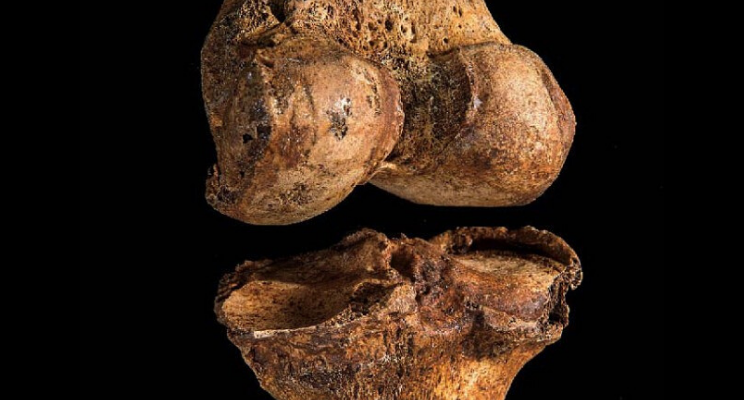
The prevalence of osteoarthritis has roughly doubled in the 20th century and that number didn’t change when weight and age were factored out. The study by Wallace et al using long-term historical and evolutionary data looked at the skeletal remains of older people with a well-documented body mass index from the last two centuries alongside  prehistoric knees.

The implications are clear – loading and longer lifespans are almost certainly not the main cause.  The unconfirmed, but likely candidates are the surge in recent lifestyle diseases: metabolic syndrome, diabetes and heart disease (see Kluzek et al or Jiang). These are reassuringly treatable. We can accept that biomechanically knee osteoarthritis “wear-and-tear” problem can be aggravated by weight and age, but recent studies show with great statistical significance that we have a bigger factor that must be contributing to its prevalence in our ageing population, likely biological with genes and heritability coming into play. So what Orthotics services are currently feeling or noticing, is possibly more referrals for OA knee bracing.  Certainly this is something I have felt in the last decade, with a notable increase in Tri – compartment.

As an adjunct, Battié et al found with twins that as much as 47%–66% of spinal degeneration is due to hereditary and shared environmental factors, whereas only 2%–10% of the degeneration can be explained by physical stresses imposed by strenuous occupations or sporting activities.

In contrast to best practice guidelines for knee OA, findings from several different healthcare settings have identified that nonsurgical treatments are underused and TKA is overused. Empirical evidence and qualitative observations suggest that patients’ willingness to accept nonsurgical interventions for knee OA is also at an all time low. Qualitative investigation of why patients may feel that such non surgical interventions are of little value has been an important step toward increasing conservative treatment of knee OA.

I think we can all agree that there is no doubt in cases of excessive asymmetry / imbalance it is unlikely that manual therapies or conservative treatment can substantially lower a VAS pain score.  The difficulty as always is being able to quantify the impact of conservative treatments on an individual with minor / moderate imbalance, or wear and tear. With any joint condition it depends on the individual biological and psychological threshold to reserve capacity to allow for asymmetry and imperfections to exist without symptoms.

Lederman has an excellent paper on this with LBP, with regard to structuralism that equally resonates with an OA knee; we didn’t really nutshell it but let’s just leave it at pathomechanics do not determine symptomatology.

Now back to structuralism – this one of the biggest challenges to the Orthotist treating these OA knees.  Studies have illustrated quite well that patients’ beliefs in a biomechanical model of progressive joint degradation often appeared to originate within earlier clinical encounters and from literal interpretation of the term ‘wear and tear’. These beliefs led to uncertainty regarding interpretation of daily symptoms and participants’ ability to influence the rate of decline and certainty that joint replacement surgery represented the only effective solution to fix the damaged knee.  I witness this weekly in clinic, as clients simply feel they are going through the tick box hurdles before being considered for partial or full TKA and we really need to get them to change this mindset.

As clinicians it is paramount that when treating with nonsurgical interventions you consider exploring and targeting patient held misconceptions about, causes, consequences, timeline, and treatment of knee OA to influence the above mindset. These misconceptions about knee OA treatment influence patients acceptance of nonsurgical, evidence-based treatments such as exercise and weight loss. The author would suggest that once diagnosed with “bone-on-bone” changes, we deliver this with more information on how the joint may of reached this point and that with hindsight there was likely nothing the client could of done differently with the knee. Disseminating up to date clinical evidence on effectiveness of conservative management to prevent many disregarding an exercise based or bracing intervention further damaging their joint or feeling it, is merely futile. It’s time to challenge and be honest about structuralism and get our clients on board with compliance.

#orthotics #osteoarthritis #knee #oa #oaknee

linkedinmail